How to Buy and Operate a Restaurant Property in Austin, TX
What to Look for in a Restaurant Property
For many restaurateurs, one of the biggest decisions isn’t just what concept to launch—it’s whether to lease or own the real estate. In fast-growing markets like Austin and Cedar Park, owning your restaurant property can provide long-term stability, control, and wealth-building potential.
Not all restaurant buildings are created equal. The best opportunities typically include:
1. Second-Generation Restaurant Space
One of the most valuable opportunities for owner-users is acquiring a second-generation restaurant property—a space that has already been built out and operated as a restaurant.
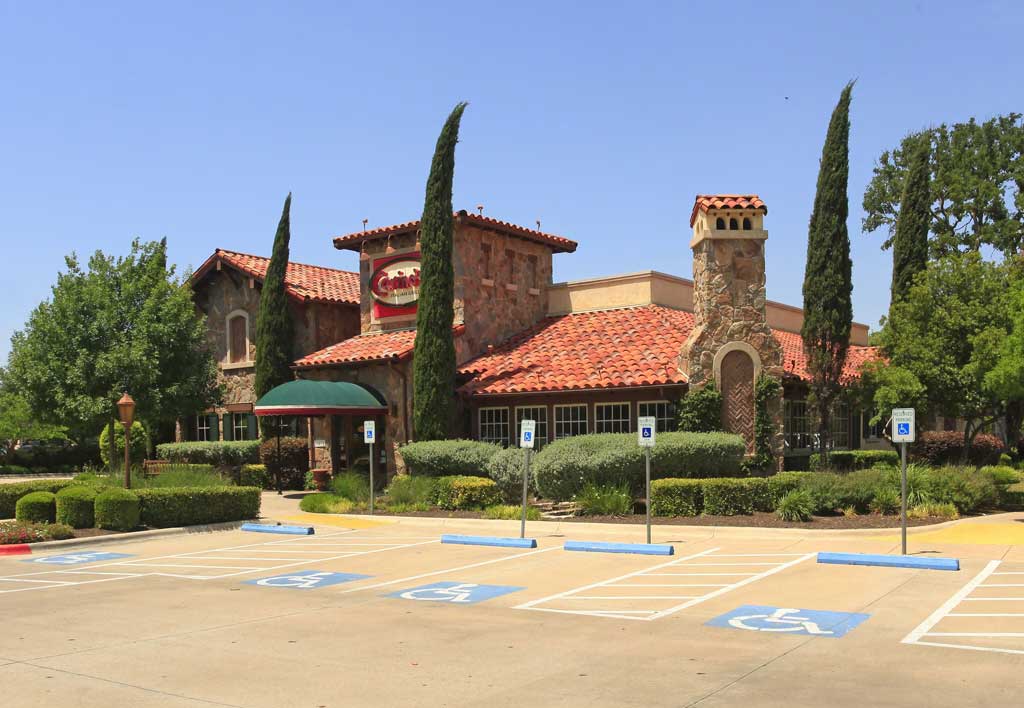
Former Johnny Carino’s location in Cedar Park, demonstrating established restaurant infrastructure and long-term viability for food and beverage concepts.
These properties can save:
- Hundreds of thousands in buildout costs
- Months of permitting and construction time
- Significant upfront risk
Investors should evaluate:
- Current or projected NOI
- Lease structure (NNN vs. gross)
- Tenant strength and lease term
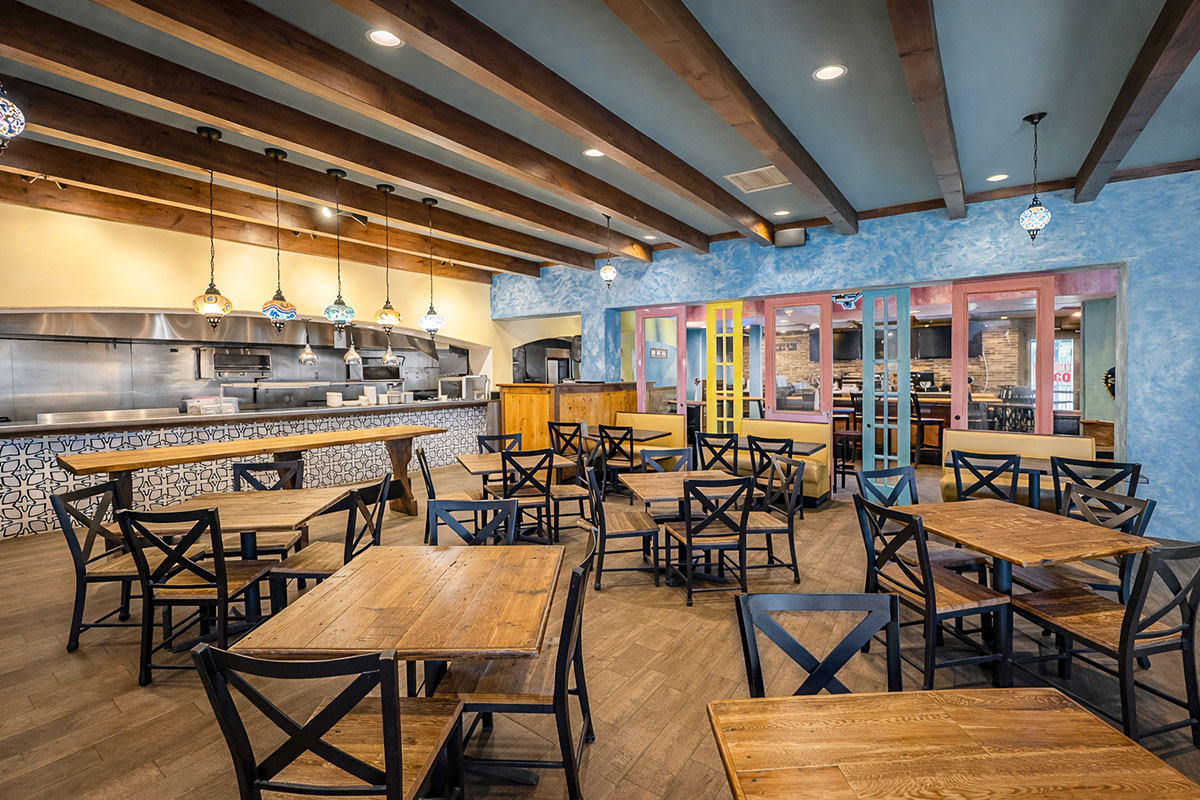
This type of existing infrastructure—such as commercial kitchen layouts, venting systems, and dining configurations—can significantly accelerate a new operator’s timeline and reduce capital requirements.
2. High Traffic & Visibility
High traffic and visibility are fundamental drivers of restaurant performance, especially along major corridors like RM 620.
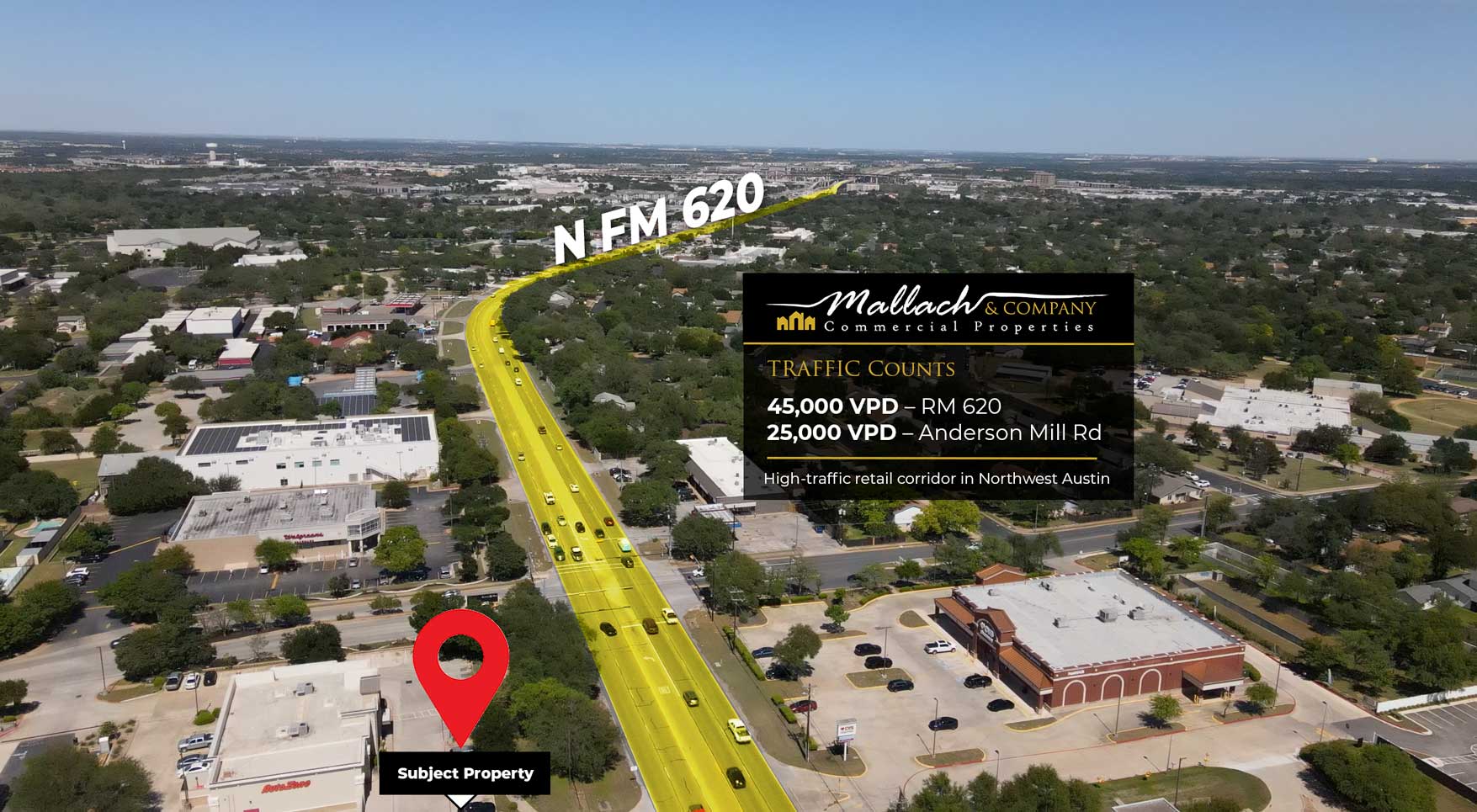
Strong daily vehicle counts translate into consistent exposure and organic customer acquisition, reducing reliance on paid marketing. However, traffic alone isn’t enough—the site must offer easy ingress and egress so customers can conveniently turn in without friction, along with clear signage that captures attention at speed.
Look for locations with:
- Strong daily vehicle counts
- Easy access and signage
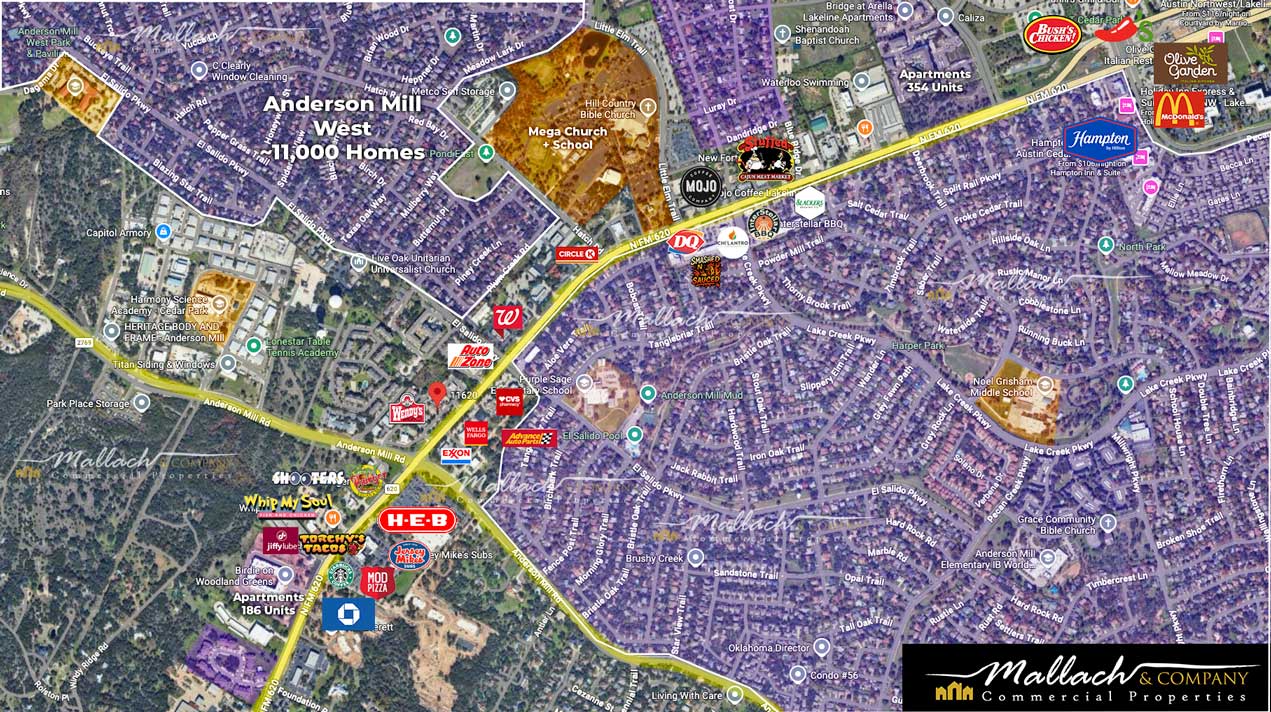
- Nearby residential density
When combined with dense surrounding residential neighborhoods, this creates a reliable customer base for both repeat visits and new traffic, positioning the property for sustained, high-volume performance.
3. Parking & Accessibility
One of the most overlooked — yet critical — factors in restaurant real estate is parking availability and site functionality.
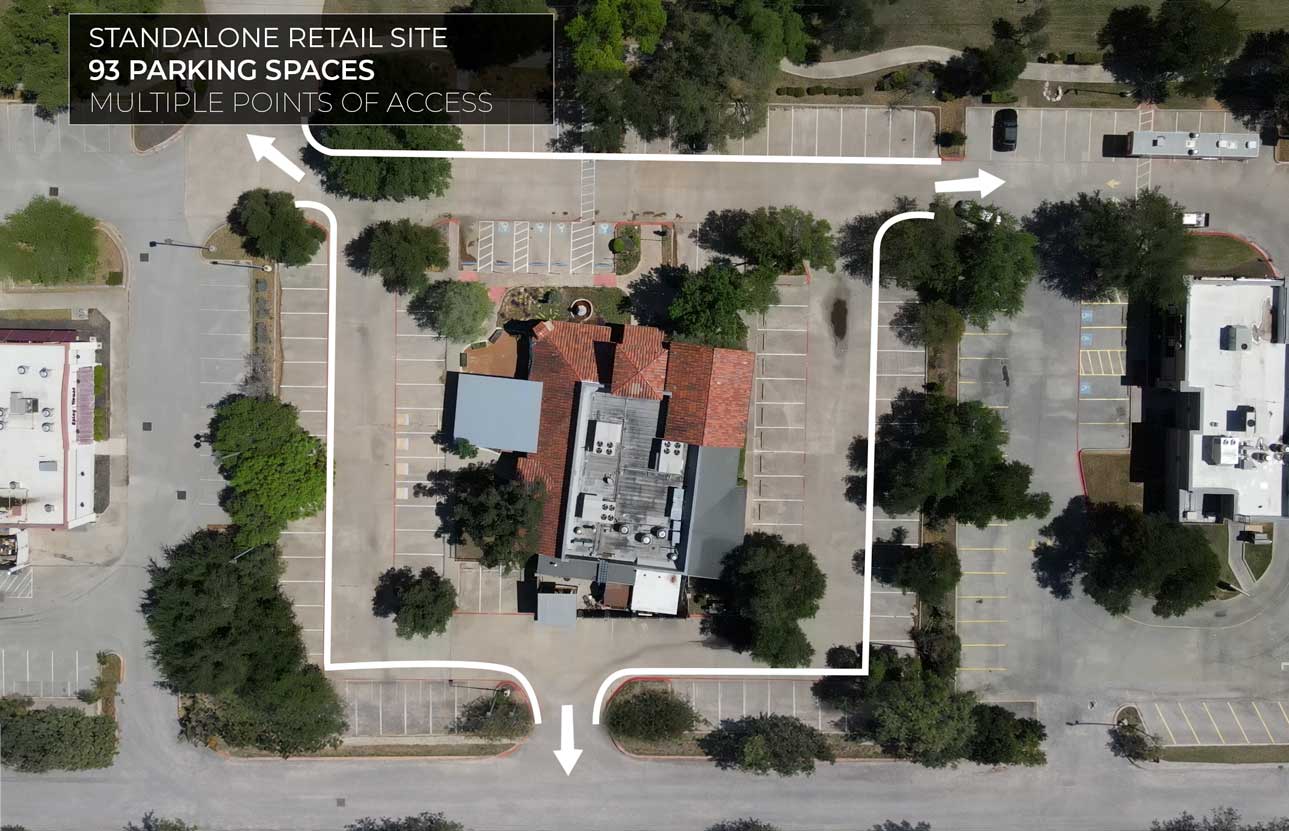
cedar-park-restaurant-site-plan-parking-access-aerial
Standalone retail site featuring 93 parking spaces and multiple access points in a high-demand Cedar Park corridor.
What 93 Parking Spaces Actually Means for an Operator
For owner-users, parking isn’t just a convenience. It directly impacts:
- Customer experience
- Table turnover
- Peak-hour revenue
- Long-term operational success
At this property, the site offers 93 on-site parking spaces, which is a significant advantage for a standalone restaurant in a high-traffic corridor like RM 620.
In practical terms, this level of parking allows for:
1. Higher Peak Capacity
Restaurants live and die by peak hours — lunch and dinner rush.
With 93 spaces, you can:
- Accommodate large volumes of customers without overflow
- Avoid turning away business due to parking constraints
- Support higher seating capacity without bottlenecks
2. Better Customer Experience
Parking friction is one of the fastest ways to lose a customer.
A well-designed lot with ample spaces means:
- Easier entry and exit during busy hours
- Reduced congestion and confusion
- A more welcoming, accessible environment
This is especially important for:
- Families
- Older demographics
- Takeout and delivery drivers
3. Stronger Takeout & Delivery Flow
Modern restaurants rely heavily on:
- Online ordering
- Third-party delivery services
- Curbside pickup
With ample parking, operators can:
- Designate pickup zones ( like -To-Go Orders)
- Keep delivery traffic separate from dine-in customers
- Maintain operational efficiency during peak times
For operators looking to establish a long-term presence in Austin, owning a restaurant property can be one of the most strategic moves you make.
The right property doesn’t just support your business—it becomes part of your long-term investment strategy.